

The SaaS Positioning Playbook for Seed-to-Series-A Founders
A working playbook — not a theory deck — for founders between Seed and Series A who already have product, customers, and revenue, and now need their go-to-market to actually compound.
Why positioning, before sales
Between Seed and Series A, most B2B SaaS companies don't have a sales problem. They have a positioning problem that looks like a sales problem.
Symptoms you'll recognize:
- Win rates above 30% inside one tight segment, and below 10% everywhere else.
- Reps freelance the pitch. Every demo sounds different. Every deck has a "v_final_FINAL_v3."
- Pipeline is full but qualification is loose, so forecast accuracy is a coin flip.
- Marketing produces content that the sales team doesn't use.
- Churn is concentrated in the deals you should never have closed.
- New hires take 4–6 months to ramp because there is no canonical story.
These are not sales execution problems. They are positioning problems showing up downstream. You can spend your way through them — more reps, more SDRs, more ads — but you'll burn 12 months and a chunk of the round before you realize the leak is upstream.
Positioning is the single highest-leverage thing you can fix before scaling spend. Fix it and every other lever — outbound, content, paid, partnerships, hiring — gets cheaper and faster. Don't fix it and you'll raise a Series A on momentum that quietly stalls 90 days later.
This playbook is the version of that fix I run with founders. It is intentionally short, opinionated, and structured so you can do the foundational work in one focused 90-minute session and the rollout in 30, 60, and 90 days.
How to use this playbook
There are two clocks.
The 90-minute clock — do this first. Block 90 uninterrupted minutes with your co-founder or head of sales. Work through Chapter 1 (ICP refit, ~45 min) and Chapter 2 (positioning statement, ~45 min). At the end of that block you'll have a defensible ICP and a 4-sentence positioning statement on one page. That one page is the source of truth for everything that follows.
The 30-60-90 clock — do this next. Use Chapter 5 to roll the new positioning across your website, sales motion, and content over the next quarter. Don't skip ahead and "just" rewrite the homepage. The order matters: ICP → positioning → web → sales → content → measurement.
Chapters 3, 4, and 6 are reference material. Pull them in when you hit the relevant decision (category vs. wedge, channel selection, anti-patterns).

Chapter 1 — The 90-minute ICP refit
Why refit, not redefine
If you have paying customers, your ICP already exists in your data. You just haven't extracted it yet. Most founders try to imagine an ICP from first principles. Don't. Pull it from what already closed and what already retained.
The 90-minute sequence
- Pull a sample (10 min). Last 20 closed-won accounts. Last 10 closed-lost accounts. Last 5 churned accounts.
- Tag each account (15 min). Use the table below. One row per account. Don't overthink it — a 2-second judgment per cell is fine.
- Score fit signals (10 min). For each closed-won row, score Pain Intensity, Willingness to Pay, Ease to Close, and Net Retention on a 1–5 scale.
- Find the top quartile (15 min). Sort by total fit score. The top 25% is your ICP signal. Look for what they share that the bottom 75% does not.
- Write the ICP in one sentence (10 min). Template: "[Segment] companies, [size range], with [trigger event], whose [buyer role] is responsible for [outcome they're being measured on]."
- Pressure test (15 min). Ask: would we now reject a deal from a company outside this ICP, even if they wanted to buy? If the answer is "no, we'd take their money," your ICP is still too soft. Tighten it.
- Write 3 disqualifiers (10 min). Specific, observable signals that send a deal back to a nurture list.
- Translate to sales (5 min). Convert ICP and disqualifiers into 3 qualifying questions reps will actually ask on call one.
The ICP refit table (fill in)
| Account | Industry | Size (FTE) | ARR Band | Buyer Role | Trigger Event | Status Quo Before Us | Alternative Considered | Time to First Value | Net Retention | Pain (1-5) | WTP (1-5) | Ease to Close (1-5) | Fit Score |
|---|---|---|---|---|---|---|---|---|---|---|---|---|---|
| _________ | _________ | ___ | _____ | _________ | _________ | _________ | _________ | ___ days | ___% | _ | _ | _ | __ |
Print this table. Fill it in by hand. The friction is the point — it forces a real judgment per account.
What "good" looks like
- ICP fits in one sentence and includes a trigger event, not just firmographics.
- You can name 3 reasons to disqualify a prospect on the first call.
- Sales, marketing, and the founder describe the ICP using the same words within 24 hours.
Chapter 2 — A positioning statement that survives contact with sales
Most positioning statements die the first time a rep opens a real call. They're elegant on a slide and useless on a Zoom with a skeptical VP of Finance.
A statement that survives sales has four jobs: it identifies the buyer, names the pain in their language, frames the category, and draws a sharp line against the alternative they're actually comparing you to.
The 4-sentence template
For [specific ICP segment + buyer role + trigger event], who [acute, expensive problem the status quo causes them this quarter], [Product] is a [category frame] that [unique mechanism — how it works differently, not just what it does]. Unlike [the primary alternative the buyer actually considers], we [single differentiator tied to the buyer's measured outcome].
Rules:
- Sentence 1 names a trigger, not just a persona. "Series A B2B SaaS finance teams" is firmographics. "Series A B2B SaaS finance teams whose board is now asking for a 10-day close" is a trigger.
- Sentence 2 uses the buyer's words. Not yours.
- Sentence 3 must contain a mechanism, not just outcomes. Outcomes are table stakes; mechanism is why you win.
- Sentence 4 names a real alternative — usually a competitor or the status quo (spreadsheets, in-house build, "do nothing").
Worked example
For Series A B2B SaaS finance teams running on QuickBooks whose board has just asked them to close the books in under 10 business days, who are losing 4–6 hours every week reconciling subscription billing across Stripe, HubSpot, and spreadsheets, LedgerLoop is a subscription-aware close platform that pulls revenue, retention, and AR data directly from your billing stack into pre-built SaaS close workflows. Unlike general-purpose close tools like FloQast, we model SaaS revenue waterfalls natively, so your team closes 60% faster without rebuilding journal entries every month.
Stress test before you ship it
Read it aloud to three people: a customer, a rep, and someone outside your industry. If any of them ask "wait, what does it do?" — the mechanism sentence is too vague. Rewrite it.
Chapter 3 — The Category vs. Wedge decision tree
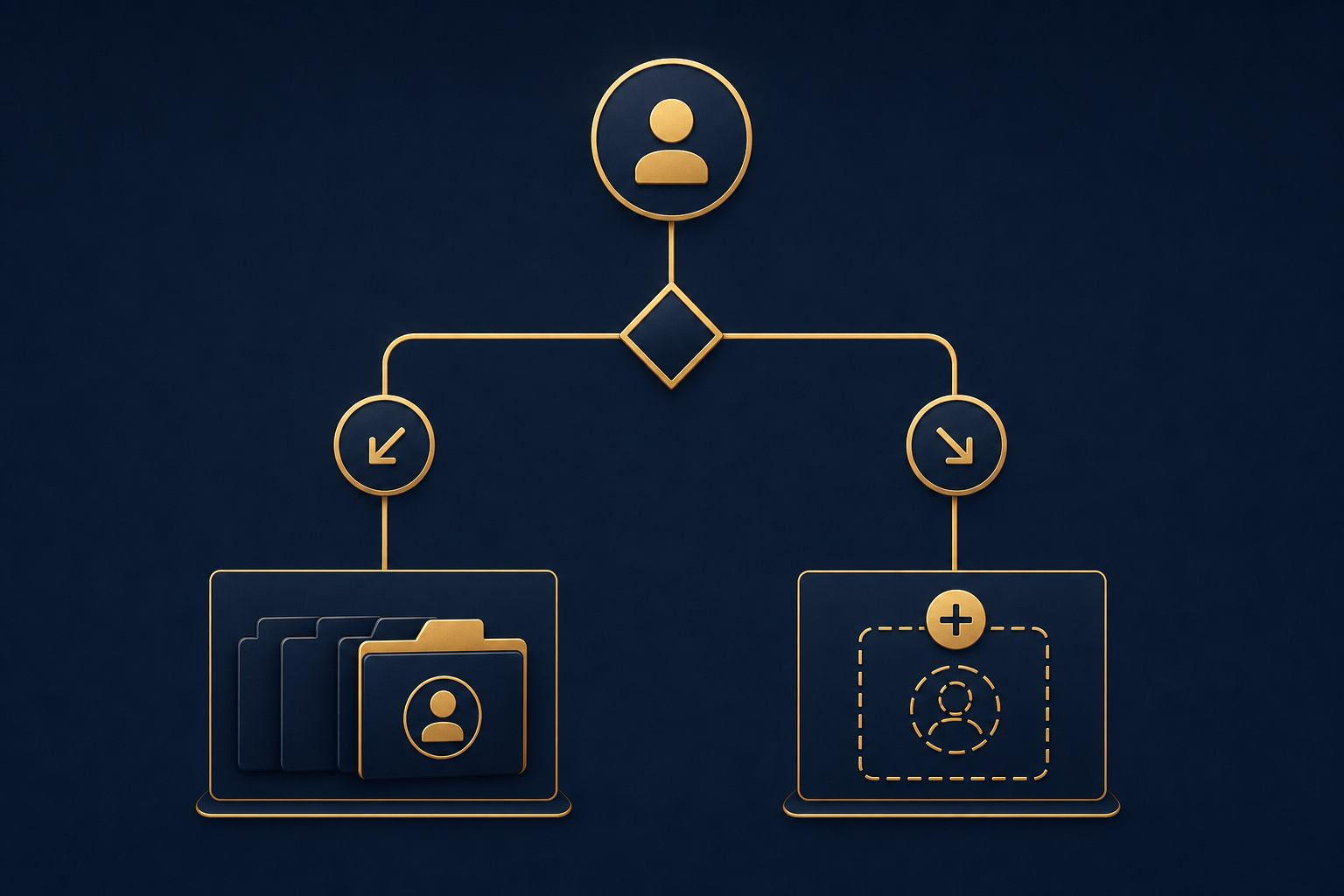
Founders love category creation. Boards love category creation. Almost no Seed-to-Series A SaaS company should attempt category creation. Wedge first. Category later, maybe.
Decision criteria
Answer each. If you score 3 or more "wedge" answers, wedge. Default to wedge if uncertain.
| Question | Wedge if… | Category if… |
|---|---|---|
| Is there a named category your buyer already searches for? | Yes — wedge into it | No — and there is real budget anyway |
| Is there a dominant incumbent with >40% mindshare in that category? | Yes | No |
| Can you reach $5M ARR by being best at one painful workflow? | Yes | No — you need the whole category to grow |
| Do you have $30M+ in capital, a 5+ year horizon, and a storyteller founder? | No | Yes |
| Will the buyer pay a premium for a new category vs. a feature in an existing one? | No (test in 5 interviews) | Yes (validated in interviews) |
| Is there an existing budget line item for this? | Yes | No, and you'd have to create one |
Default decision: wedge. Wedge into a known budget line, win a clear workflow, expand from there. Category creation is a Series B+ move with rare exceptions.
Mini example 1 — Wedge done well
A compliance automation tool launches into the well-known "SOC 2 automation" workflow. They don't try to redefine GRC. They make a sharp claim: "Get SOC 2 ready in 6 weeks, not 6 months." Budget line exists. Buyer is searching. Competitors exist but are slow and consultant-heavy. The wedge wins; expansion into ISO 27001, HIPAA, and broader GRC comes later, from a position of strength.
Mini example 2 — Category creation that earned it
A data infrastructure company creates "cloud data warehouse" as a category — but only after cloud adoption, analytics demand, and a clear architectural gap created real urgency. They had the capital, the time horizon, and a technical story buyers were ready to hear. Even then, it took years and most of the category-creation playbook from start to finish.
The lesson: most founders should wedge. The companies you admire for "creating a category" almost always wedged first and rewrote the story later.

Chapter 4 — 12 distribution channels ranked by stage and ACV
There is no universal best channel. There are channels that fit your stage and ACV, and channels that don't. Pick 2 to focus on, run them deep, ignore the rest.
| # | Channel | Best Stage | ACV Fit | Effort | Notes |
|---|---|---|---|---|---|
| 1 | Founder-led outbound (email + LinkedIn) | Pre-seed → Series A | $10K – $250K | High (founder time) | The highest-signal channel pre-PMF. Don't outsource until you've sent 500 yourself. |
| 2 | Warm intros / customer referrals | Any | Any | Low–Med | Underrated. Ask every happy customer for 2 intros at month 3. |
| 3 | Founder content on LinkedIn | Seed → Series A | $25K+ | High (founder time) | Compounds slowly, then suddenly. Best ROI is for founders with a strong POV. |
| 4 | SEO / programmatic content | Series A+ | $5K – $100K | High + slow | Don't start until ICP is locked. 6–12 month payback. |
| 5 | Paid search (Google Ads) | Series A+ | $5K – $50K | Medium | Works only if buyers actively search for your category. Test with $5K first. |
| 6 | Paid social (LinkedIn Ads) | Series A+ | $25K+ | Medium | Expensive CPMs. Use for retargeting and ICP-tight campaigns, not cold reach. |
| 7 | Communities (Slack/Discord/Reddit) | Seed → Series A | $5K – $50K | Medium | Show up to help, not to pitch. 3–6 months of presence before any pipeline. |
| 8 | Industry events / trade shows | Seed → Series A | $50K+ | High + costly | One well-targeted event > five generic ones. Pre-book meetings; don't rely on the booth. |
| 9 | Webinars / podcast guesting | Seed → Series A | $25K+ | Medium | Borrow other people's audiences. Aim for 1 guest spot per month. |
| 10 | Partnerships / integrations / marketplaces | Series A+ | Any | Medium–High | Best when the partner's customer = your ICP. Avoid "logo swap" partnerships. |
| 11 | Review sites (G2, Capterra) | Series A+ | $10K – $100K | Low–Med | Necessary table stakes once you have 50+ customers. Not a primary channel. |
| 12 | Product-led / freemium / self-serve | Any with the right product | <$25K | High (product) | Only viable if a single user can get real value alone in <15 minutes. |
Stage-by-stage shortlist:
- Seed: Channels 1, 2, 3. Founder time is the moat.
- Post-Seed → pre-Series A: Channels 1, 3, 7, 9. Layer in 4 if SEO fits your buyer.
- Series A: Channels 4, 5, 6, 10, 11. Start hiring around channels that have already shown signal.
Chapter 5 — The 30-60-90 day rollout
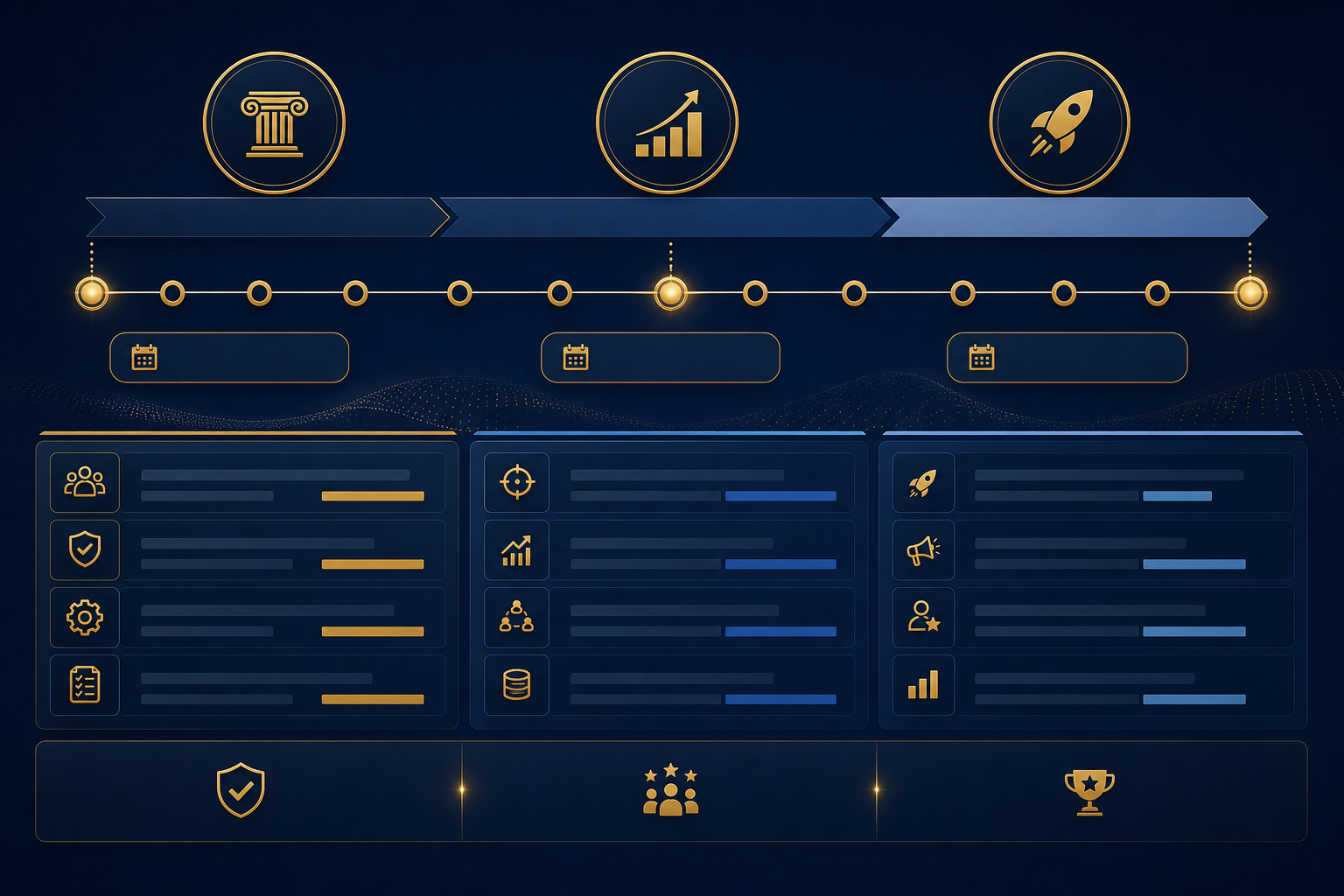
The work of Chapters 1–4 is wasted if it lives in a Notion doc no one opens. This chapter rolls the new positioning across web, sales, and content in 12 weeks.
Days 1–30: Foundation
Week 1 — Lock the source of truth.
- Run the 90-minute ICP refit (Chapter 1).
- Draft the 4-sentence positioning statement (Chapter 2).
- Align founders + head of sales on the one-page output. Print it. Pin it.
Week 2 — Rewrite the top of the website.
- Rewrite the hero (H1, subhead, primary CTA) using the positioning statement.
- Rewrite the "who this is for" section. Be specific enough that a non-ICP visitor self-disqualifies.
- Ship one proof asset: a 1-page customer story matching the ICP.
Week 3 — Reset the sales motion.
- Rewrite 3 outbound sequences, one per priority ICP sub-segment.
- Train reps on the 3 disqualifiers from Chapter 1. Reps must be allowed — and rewarded — to disqualify.
- Update the discovery script: trigger event question, status quo question, alternative-considered question.
Week 4 — Audit and prune content.
- List every content asset on the site and in sales.
- Kill or hide anything that contradicts the new positioning. Yes, even the popular ones.
- Commit to 2 cornerstone pieces to publish in days 31–60.
Days 31–60: Activation
Week 5 — Publish cornerstone piece #1.
- POV thought leadership for the ICP: a contrarian take only your team could write. Push it through founder LinkedIn and email.
Week 6 — Launch ICP-specific outbound.
- Two campaigns live. One trigger-event campaign, one alternative-displacement campaign.
- Refresh the sales deck end-to-end against the new positioning. No more "v_final."
Week 7 — Validate with customers.
- Run 3 customer interviews. Ask them to describe what you do in their own words.
- Use their language to refine the differentiation sentence. The mechanism statement almost always gets sharper here.
Week 8 — Publish cornerstone piece #2.
- An anti-status-quo essay: name the legacy approach, name its cost, name your alternative.
- Start a founder LinkedIn cadence: 3 posts/week, 2 reactive + 1 cornerstone.
Days 61–90: Scale and measure
Week 9 — Pricing and packaging check.
- If positioning implies a different buyer or expanded scope, your pricing tier or packaging probably needs to move. Decide now, not in Q3.
Week 10 — Lifecycle and CS alignment.
- Update onboarding emails, in-product first-run, and CS QBR templates against the new positioning.
- Make sure CS talks about value using the same words as sales and marketing.
Week 11 — Measure.
- Hero CTR, key page conversion, outbound reply rate, demo-to-close rate, win rate on ICP vs. non-ICP.
- Compare to the 60-day baseline. Net retention is too slow to read yet — expect that signal at month 4–5.
Week 12 — Decide.
- What stays? What changes? What gets killed?
- Lock the playbook for next quarter. Schedule the next refit for 6 months out.
Chapter 6 — Seven positioning anti-patterns
1. The feature-list pitch
Symptom: Your homepage and sales deck read like a feature list — "real-time dashboards, automated workflows, integrations." A prospect leaves the call knowing what you have but not why they need it this quarter. Fix: Replace features with trigger + outcome + mechanism. Features support the story; they don't lead it.
2. The "we serve everyone" trap
Symptom: ICP spans 3+ company sizes and 5+ industries. Demos go wherever the prospect steers them. Win rate is high in one tight band and miserable everywhere else. Fix: Pick the single segment that buys fastest and retains best. Rewrite copy for them only. Other segments are bonus, not target.
3. The me-too category claim
Symptom: "AI-powered platform for X" — the exact phrase 12 competitors use. The buyer cannot tell you apart. Fix: Add a contrarian POV. State what you believe that the competition doesn't. Differentiation lives in beliefs, not adjectives.
4. The platform mirage
Symptom: You call yourself a "platform" before $5–10M ARR. Buyers ask what it actually does. Reps stall on demos. Fix: Name the single workflow you replace. Promise depth, not breadth. "Platform" is earned post-Series A, not claimed pre-seed.
5. The hidden mechanism
Symptom: Your messaging is all outcomes ("close 60% faster," "save 10 hours a week") with no explanation of how. Skeptical buyers — the ones with budget — bounce. Fix: A one-sentence differentiated mechanism on the hero and slide two of the sales deck. The buyer needs to picture how it works to believe the outcome.
6. Pricing-as-positioning
Symptom: Positioning shifts to chase deal size or sit just below a competitor's list price. Discounting is the main negotiation lever. Fix: Lock positioning first. Price to the value it implies. If your positioning can't support the price, the positioning is wrong — not the price.
7. The founder-monologue site
Symptom: Copy uses founder language — "our journey," "our mission," "we believe." The ICP's actual words are absent. Fix: Conduct five customer interviews. Steal their phrases verbatim. Rewrite the site so the buyer hears themselves in the first 5 seconds.
Closing — Book a positioning teardown
If you've made it this far, you have everything you need to run the 90-minute refit and the 30-60-90 rollout yourself. Most founders will. The ones who want a second set of eyes — someone who has watched a few dozen of these go right and wrong — book a positioning teardown.
A teardown is one 60-minute working session. We pressure-test your ICP, rewrite your positioning statement live, and leave you with a one-page source of truth and a prioritized 30-day list. No deck. No fluff.
Book a positioning teardown at mattrebeiro.com.
— Matt Rebeiro